

In this day and age, 80% of customers prefer a personalized buying experience. Simultaneously, brands that excel at personalization are 71% more likely to report improved customer loyalty (by McKinsey and Thematic). It looks like a win-win situation, but how do we reach the proper personalization setting?
Here comes the unified commerce!
At its core, unified commerce is a holistic business strategy that integrates every customer touchpoint—from physical storefronts and e-commerce sites—to essential back-office operations such as inventory, logistics, and payments into a single, cohesive ecosystem.
It’s like a central brain for your entire commerce business. Instead of relying on scattered systems that barely talk to each other and update only after the fact, unified commerce centralizes everything and keeps data synchronized in real time.
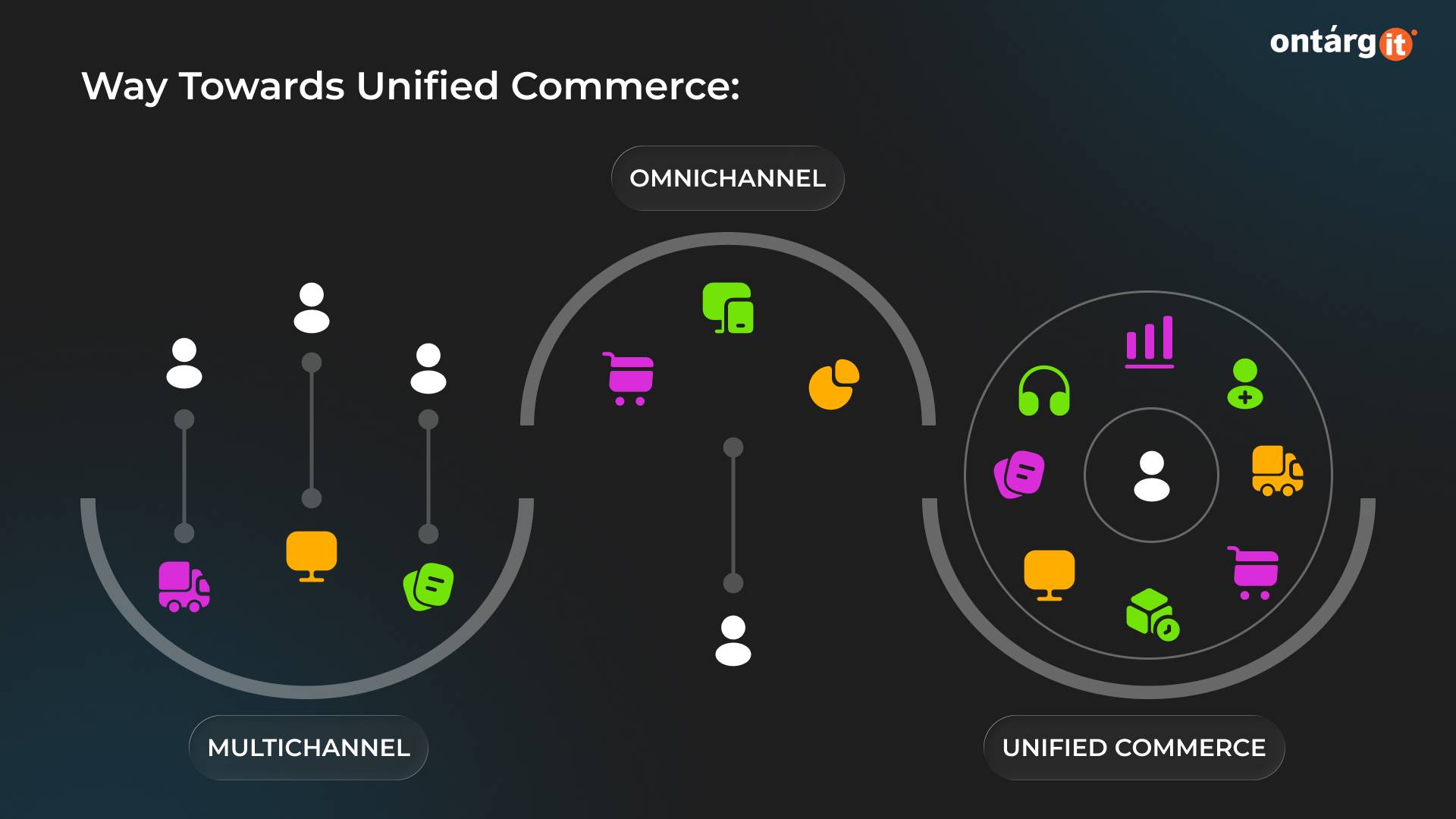
To understand the shift in retail strategy, it is helpful to compare the three primary models:
In any case, high-quality data is essential for success; it must be accurate, complete, consistent, timely, and relevant to avoid misguided decision-making. So consolidated data creates a single, detailed customer profile accessible across Sales, Marketing, and Service platforms.
Prepare Your Data Foundation
Firstly, you must establish a so-called single source of truth – a centralized platform that is accessible across all departments to prevent data from being trapped in silos. For example, Dynamics 365 Customer Insights integrates data from CRM, ERP, databases, files, websites, and other sources into a single platform.
Next, focus on key data and discard irrelevant data; later, enrich it with fresh data, such as customer surveys, to fill gaps. Is it time-consuming? Yes, but without it, there is no unified customer profile. This unification ensures all customer information is consolidated, providing a comprehensive view of transactional, demographic, and behavioral data.
Benefits of Unified Data
Having all your data available lets you analyze it strategically, helping your business run more efficiently.
Building the “Golden Record” with Dynamics 365 Customer Insights
Once the unified commerce system is set up, we can create a complete customer view. This approach brings together data from sales, marketing, and customer service in one place. The main priorities are integrating data, making it accessible to all teams, keeping it updated, and following security and privacy rules like GDPR.
After we bring all the data together and analyze it, Customer Insights builds detailed customer profiles in one place. These profiles track every interaction, so all teams can access the same, current customer information. This helps everyone provide consistent and personalized service.
Benefits Recap of Customer 360 View


Customer Insights uses AI and machine learning to analyze data, find patterns, and predict customer behavior. These analytics help businesses understand what customers want, so they can make better decisions ahead of time.
Customer Insights works well with other Microsoft tools, making it easy to share data across your organization. This integration also helps your business scale and stay flexible as it grows.
When all your data is in one place, your team can work more efficiently. They can quickly find customer information, spend less time sorting data, and focus on bigger projects. This helps everyone make decisions faster.
Invest in your back-office
To support the “сommerce” side, which handles customer-facing interactions, the ERP ensures that customer promises can be fulfilled.
In Dynamics unified commerce, the ERP provides Inventory Visibility, meaning it tracks every item in transit, in the warehouse, and on store shelves. Additionally, the ERP contains the logic for order fulfillment. This is the “brain” that decides the most efficient way to get a product to a customer. For example, when an order comes in via the web, the ERP’s DOM rules evaluate: “Which warehouse is closest? Does the local store have it? What is the cheapest shipping method?”
In a truly unified ecosystem, the line between the ERP and the Commerce platform is almost invisible because they share the same database.
Importance for Growth
Using data-driven insights helps a company make better decisions and improve profits by relying on evidence instead of guesswork. This approach leads to higher conversion rates, greater customer lifetime value, lower acquisition costs, and better inventory management.