
Microsoft has released an updated version of its Power Platform Administration and Governance whitepaper, reflecting significant changes to how enterprise organizations are expected to plan, secure, and operate their Power Platform environments. The document covers a platform that has materially changed since the previous edition — not in its component products, but in the governance architecture that underpins them. For IT leaders managing Power Platform deployments at scale, several of the changes have immediate operational implications.
The default environment stops being the default landing zone
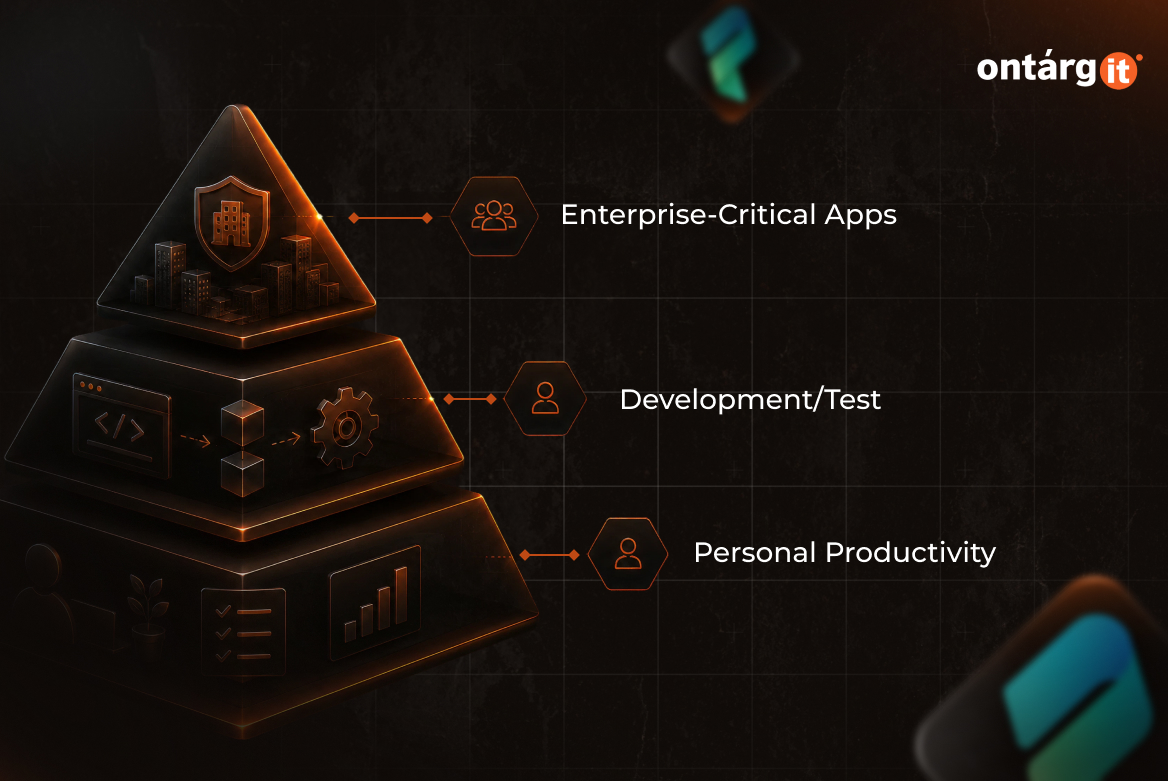
For years, the default environment served as the practical starting point for most makers — simply where they landed. The updated guidance makes a clear operational recommendation: the default environment should be repositioned as a tightly controlled personal productivity space, not a staging ground for long-lived solutions.
The mechanism that makes this possible is environment routing — an automated capability that evaluates a maker’s identity or role the moment they first open Power Apps, Power Automate, or Copilot Studio, then provisions them into the correct governed space before they write a single formula. No manual admin step. No policy applied after the fact. Governance begins at first contact.
Paired with environment groups, newly created environments are automatically added to the appropriate cluster and inherit consistent rules — connector constraints, sharing limits, ALM defaults — without requiring one-by-one configuration. The practical result: consistent governance at scale, not governance recovered after problems surface.
Zones: from the maturity concept to the operating model
Zones are no longer conceptual maturity levels that a team gradually works toward. They are now operational entities, each defined by specific connector access rules, data boundaries, sharing constraints, and lifecycle expectations — enforced through environment-group rules rather than manual configuration.
The zone structure runs from Zone 1 (personal productivity) — individual, short-lived apps and flows with limited data exposure, auto-provisioned through routing — through team collaboration environments, multi-solution shared environments, and Zone 4 dedicated workloads with full Development/Test/Production lifecycles.
What changes in practice: organizations that have been managing environments ad hoc now define which zone each environment belongs to, publish the rules for that zone once, and let the platform enforce them. Configuration drift becomes structurally harder. New environments inherit governance automatically.
The Managed Platform: one place for administration
The Managed Platform concept is introduced, a unified set of capabilities that consolidates what previously required multiple tools and manual processes. Discovery, configuration, deployment, and monitoring now occur through one operational layer — the Power Platform admin center (PPAC).
Four reporting experiences make up the platform’s visibility framework:
Connector governance becomes centrally defined
One of the more operationally significant changes concerns connector governance. The move away from fragmented, per-environment connector decisions — often made inconsistently by different administrators — toward centrally defined policies that specify which connectors are allowed or blocked, then enforce those decisions consistently across zones.
For organizations where Power Platform spans multiple departments or regions, this distinction matters directly: a connector permitted in a personal developer environment may be blocked in an enterprise production environment. The zone-based connector model makes that distinction explicit, enforceable, and auditable.
Agent lifecycle governance is now part of the framework
The governance model now explicitly covers agents built in Microsoft Copilot Studio, as well as apps and flows. The full agent lifecycle includes: creation in a governed personal environment, promotion through zones via standardized deployment pipelines, and ongoing monitoring via the Copilot reporting experience.
Two operational implications stand out. First, environment routing applies to Copilot Studio in the same way it applies to Power Apps and Power Automate — a maker opening Copilot Studio for the first time is routed into the correct governed environment before they build anything. Second, the Inventory experience now catalogs agents alongside apps and flows, giving administrators complete visibility into what is running, who owns it, and where it sits across the tenant.
Dataverse storage: updated notification thresholds
The previous 85%/95% alert model has been replaced by a remaining-capacity model in the dataverse storage planning. When any of the three storage categories — database, file, or log — drops below 15% available capacity, a nearing-limit notification is triggered. Below 5%, a stronger warning indicates that administrative operations may be affected.
For organizations running multiple solutions in shared environments, the guidance highlights schema collisions as a predictable risk: when multiple solutions are deployed into the same Dataverse database, table, and column names must remain unique across all installed solutions. Publisher-based naming conventions — a distinct prefix for each product team or solution family — are the recommended control.
Conclusion
The direction Microsoft is moving with Power Platform governance is toward enforcement by design rather than guidance by documentation. The zone model, environment routing, centralized inventory, and agent lifecycle controls are not incremental feature additions — they represent a structural shift in how enterprise Power Platform deployments are expected to operate. Organizations that manage environments manually and apply governance reactively now have platform mechanisms to make consistency the default. Whether their internal governance strategy and organizational processes are ready to use them is the more pressing question.