
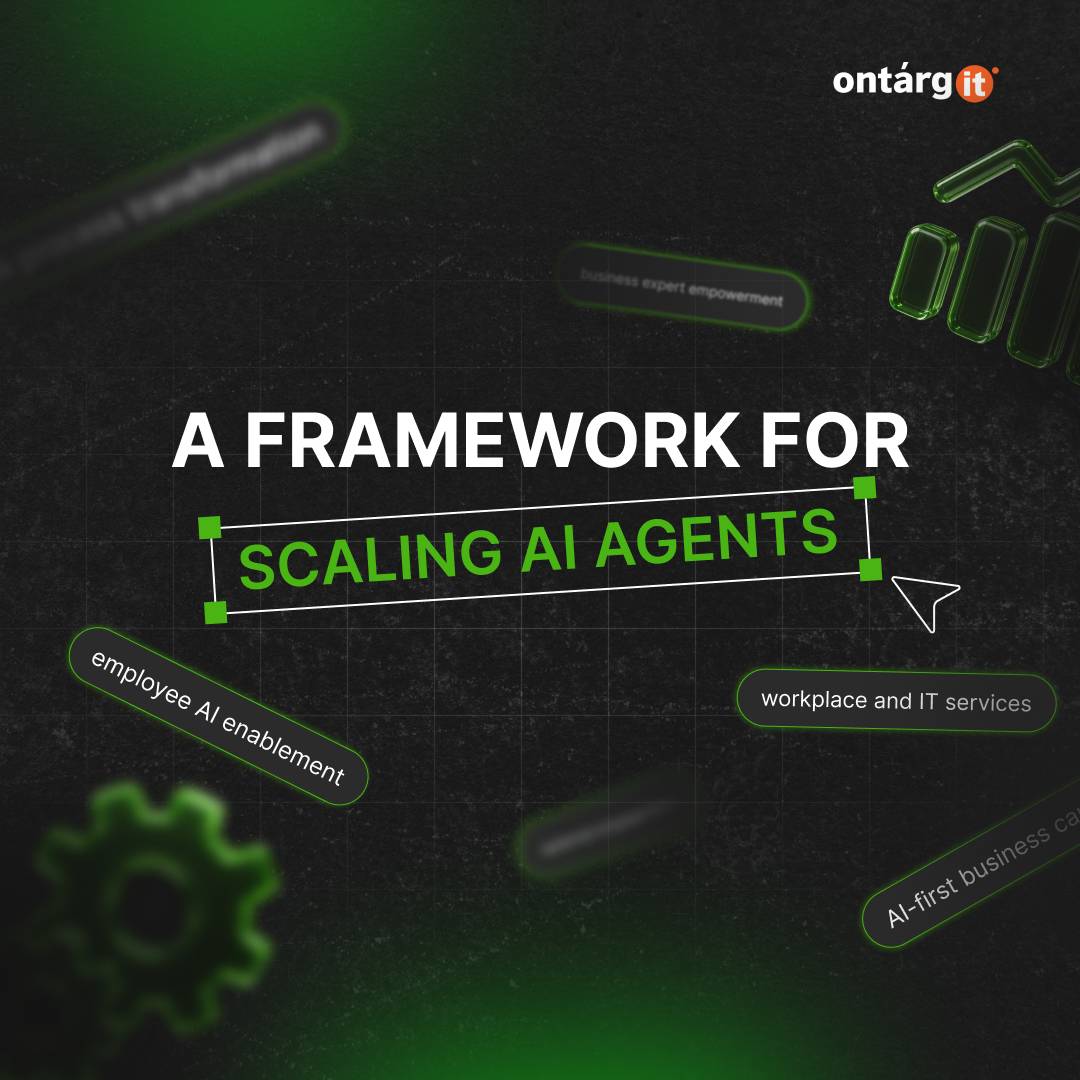
Microsoft Power Platform’s Power CAT has published the Agentic Transformation Patterns Playbook — a structured framework for organizations deciding how to deploy, govern, and scale AI agents across enterprise operations. The playbook addresses a gap that has quietly derailed many agent initiatives: organizations are applying a single operating model to agent work that ranges from helping one employee draft an email to running a company’s entire claims processing pipeline. Those two scenarios require different governance, different ownership, and different levels of organizational maturity. The playbook gives enterprise and IT leaders a classification system to match the right model to each initiative before it scales.
The Assist-to-Execute shift changes everything about governance
There is a distinction that defines every subsequent framework decision. AI agents either assist — supporting a human who retains full decision authority and executes actions themselves — or they execute, taking actions across systems with humans overseeing outcomes rather than directing each step. Assistive agents carry familiar, low-risk governance. Executive agents introduce four new demands: named ownership (who is accountable for this agent?), defined risk response (what happens when it goes wrong?), lifecycle management (who improves it over time?), and explicit governance (what is and is not within the agent’s authority?). Organizations that apply assistive-agent governance to executive agents are the ones accumulating undisclosed risk in production.
Six patterns — design choices, not stages
Agent work is organized into six transformation patterns. These are not a maturity ladder — they are simultaneous design choices, and most organizations run two or three in parallel.
Employee AI Enablement is the most accessible entry point: agents handle drafting, scheduling, summarization, and research while humans remain accountable for every decision. The scale-breaker here is organizational culture, not technology. Licenses that go unused are a leadership and enablement failure, not a platform problem.
Business Expert Empowerment scales specialist judgment without removing the expert from accountability. The agent surfaces policy answers, compliance guidance, or engineering standards on demand. The scale-breaker is knowledge quality — if the source documents are stale or incomplete, the agent’s advice is unreliable, regardless of how well the technology is configured.
Workplace and IT Services moves agents from answering questions to executing internal service workflows end-to-end: IT access provisioning, HR leave processing, and finance expense validation. The scale-breaker shifts to business strategy — specifically, service design. Automating individual tasks inside a broken service flow creates faster fragments, not a working service.
Core Business Process Transformation is where agents orchestrate mission-critical workflows across multiple systems — order-to-cash, supply chain coordination, and financial close. Human roles shift from doing the work to governing the system. This pattern requires the highest organizational maturity depth (500) in AI Strategy and Business Strategy, because agents have a direct profit-and-loss impact.
External Engagement puts agents in front of customers and partners. Brand, compliance, and customer trust are all in scope. Governance and Security maturity of 500 is required — not because the technology is more complex, but because one miscalibrated customer interaction is a brand incident, not an internal exception.
AI-First Business Capabilities are net-new. These are capabilities that did not exist before AI: sense-decide-act loops, continuous optimization engines, and multi-agent orchestration. Every maturity driver must reach 500 because there is no existing process for comparison and no incumbent workflow to guide the design.
The maturity model: find the scale-breaker, not the score
5×5 diagnostic is introduced across five capability drivers — AI Strategy and Experience, Business Strategy, Governance and Security, Technology and Data, and Organization and Culture — rated across five levels from Initial (100) to Optimized (500). The model’s primary purpose is diagnostic: match your current state to the target profile for your chosen pattern, identify the largest gap, and concentrate investment there first. The weakest driver caps the ceiling regardless of how mature the others are.
The playbook identifies five recurring patterns that break scale in practice: too many pilots with no portfolio ownership tied to outcomes; agents that cannot be reused because there are no shared foundations; high demo quality combined with low actual adoption; license deployment without an enablement motion; and shadow agents emerging because governance is undefined. Each has a documented root cause and a specific fix.
The Center of Excellence as an execution engine
Section 3 defines the CoE as the organizational structure that translates strategy into repeatable execution — not a review committee, not a bottleneck. It operates through four functions: governing through risk-proportionate release gates and audit trails; enabling through templates, training, and community; optimizing through lifecycle monitoring and drift detection; and scaling through standardized intake pipelines and reusable architecture patterns. The appropriate CoE structure — centralized, hybrid, or federated — maps directly to the pattern: centralized for employee enablement and external engagement, federated for core business transformation and AI-first capabilities.
The lifecycle framing is particularly direct: every agent in production without a monitoring plan and an improvement path is accumulating risk. Agents don’t fail with visible crashes — knowledge goes stale, integration contracts change, user behavior shifts, and the agent continues answering with full confidence while accuracy degrades. The CoE’s job is to prevent that trajectory from becoming a governance incident.
Conclusion
The Agentic Transformation Patterns Playbook formalizes what most organizations have been learning through failed pilots: there is no universal framework for agent deployment, and applying the same operating model across every initiative is the primary mechanism by which scale breaks. The practical contribution is a classification system that forces the right governance and ownership question to be asked before building starts — not after the first production incident. As organizations move from individual Copilot assistants to autonomous multi-agent processes embedded in core operations, the discipline of matching patterns to operating models becomes a competitive differentiator in its own right.