

The landscape of business technology is rapidly evolving, transitioning from static systems that only record data to dynamic systems capable of acting on information. At 2026, the emphasis shifts from basic automation to genuine operational autonomy.
While generative AI started as a tool to enhance personal productivity, the rise of agentic AI signals a significant advancement, enabling intelligent agents to interpret complex data and oversee entire business processes. This shift is more than just integrating new software; it involves rethinking how data, governance, and action interconnect to create a truly AI-driven organization.
Establishing the Foundation: Data First
The success of agentic AI relies heavily on a solid data foundation rather than just prompts. For AI agents to operate independently and dependably, corporate data needs to be clean, traceable, and contextualized with strict governance and detailed metadata. This framework not only enhances technical efficiency but also acts as an essential ethical and operational safeguard, ensuring that automated decisions are accurate, secure, and compliant, especially in high-stakes legal or financial settings.
The shift to an AI-first organization fundamentally relies on moving from scattered data to a unified and governed information ecosystem. Since autonomous AI agents need real-time, reliable data to perform complex workflows—such as order-to-cash processes or supply chain planning—Microsoft is consolidating front- and back-office operations using Dynamics 365 and the new Model Context Protocol (MCP). MCP acts as a technical bridge, allowing AI agents to communicate with complex business systems like Dynamics 365 without the need for custom-coded integrations for each task.
By combining these key applications with Microsoft Fabric and Copilot Studio, businesses can advance from basic AI assistants to a sophisticated “agentic” framework where intelligent systems analyze real-time business signals. This development turns Dynamics 365 into a flexible operational engine, enabling companies to automate millions of actions while ensuring the security and governance needed for genuine operational independence.
Microsoft Fabric signifies a vital advancement in data infrastructure, specifically designed to bridge the gap between static data storage and autonomous AI decision-making. By integrating comprehensive governance, data lineage, and interoperability with Purview directly into the platform, Microsoft has established a foundation where information is inherently trustworthy and ready for intelligent use.
Microsoft 365 Copilot’s Role
Copilot is the “connective layer” between people, data, and systems. It isn’t just a personal assistant; it orchestrates workflows across Dynamics 365, Power Platform, and Microsoft 365 to guide business decisions.

Building Your System of Agency
Microsoft positions AI agents as essential architects of modern business, capable of analyzing complex signals to plan and execute actions across organizations independently. This ecosystem includes everything from built-in tools in Dynamics 365 to highly customized agents created via Copilot Studio, all functioning within a centralized security framework. By implementing specialized agents for tasks such as sales order management, vendor payments, and technician scheduling, companies can shift from manual processes to operational autonomy.
AI Agents for Industry
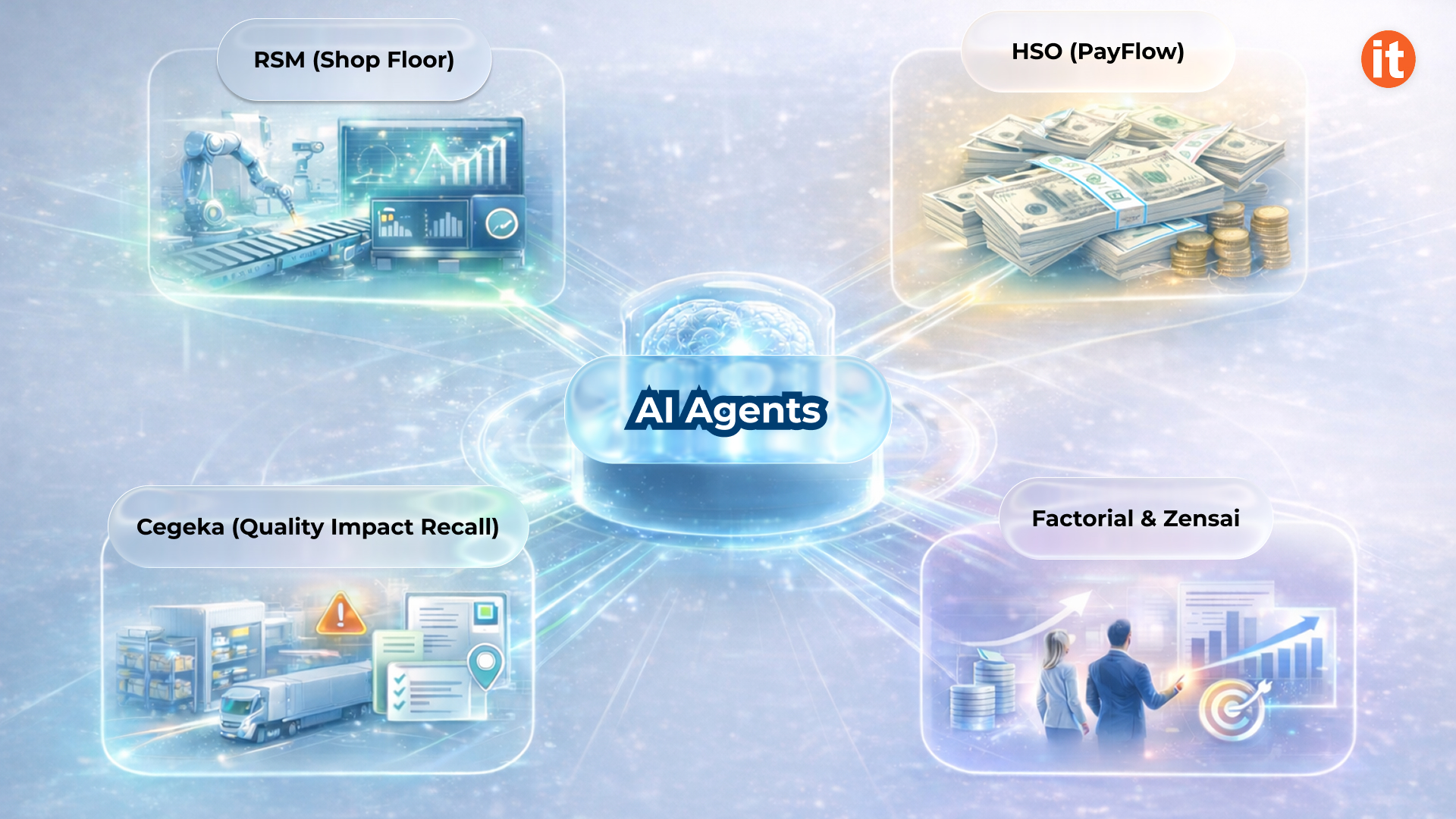
There are some examples of how third-party partners use the MCP to build specialized agents:
Pillars of Autonomy
The transition from “systems of record” to “systems of agency” marks the beginning of a new era in corporate efficiency. By unifying front- and back-office data through Dynamics 365, securing it within the governed framework of Microsoft Fabric, and enabling it via the Model Context Protocol, organizations are no longer limited by manual oversight or fragmented silos. This integrated ecosystem allows businesses to move beyond descriptive dashboards that look at the past, instead empowering a workforce of specialized AI agents to anticipate the future and execute tasks with precision. Ultimately, the companies that thrive in this era will be those that treat their data not just as a resource, but as a living foundation for autonomous growth.